
Deck Building
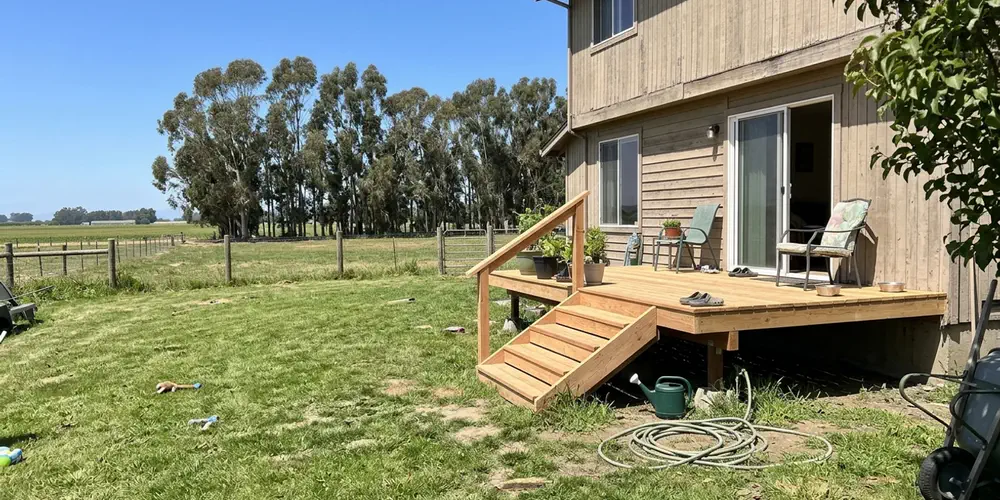
Built from the concrete footings up, in wood or composite, stairs and railing included. Or new railings and stairs on a deck that's already up.
More about new decks
If the deck behind your house has gone gray and a few boards have split, you're probably wondering whether the whole thing has to come out. A wood deck is more often replaced for cracked and split boards than for rot, so the frame under yours may still be sound. We're Santa Maria Deck Builders, and checking that frame is where we start.
Looking for a deck contractor around Santa Maria, California? We build and fix decks here and in Orcutt, across the river in Nipomo and Arroyo Grande, out in Lompoc, and in Grover Beach, Pismo Beach and Guadalupe. Tell us a bit about your deck in the form, or about the one you'd like. After we've come out to look, you'll know what we'd suggest and what the work would cost.
Built from the concrete footings up, in wood or composite, stairs and railing included. Or new railings and stairs on a deck that's already up.
More about new decks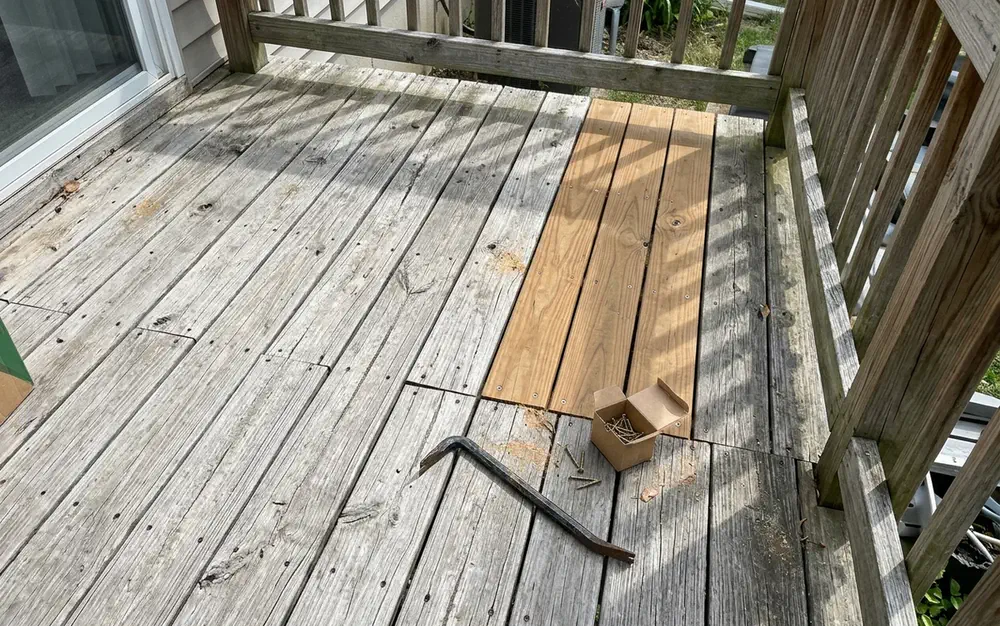
Split or loose boards, a shaky railing, a worn step or a soft post, fixed without starting over.
More about deck repair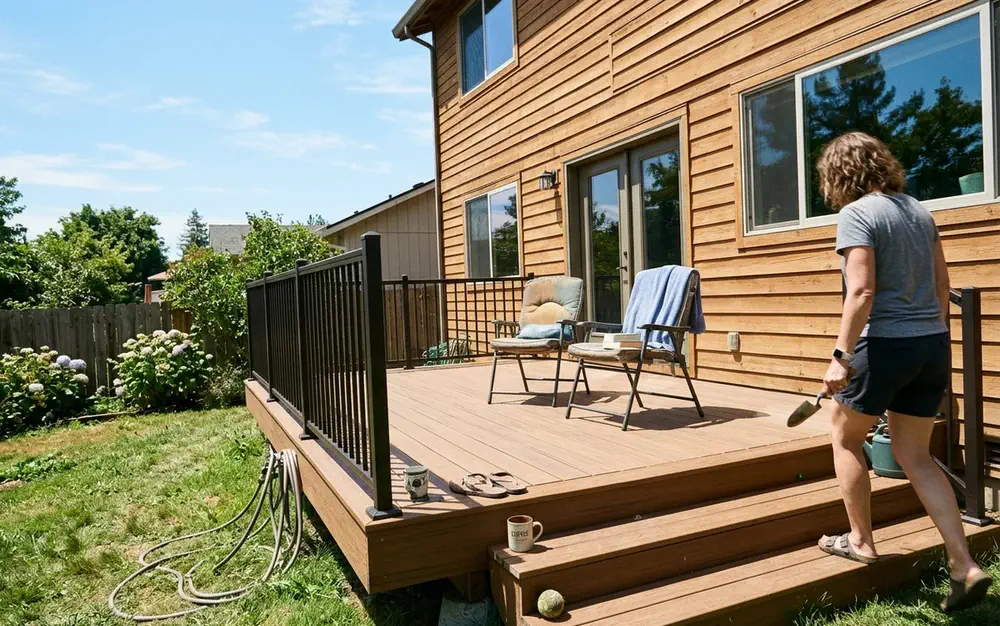
When a fresh start makes more sense, we take the old deck down and build its replacement on the same spot.
More about deck replacement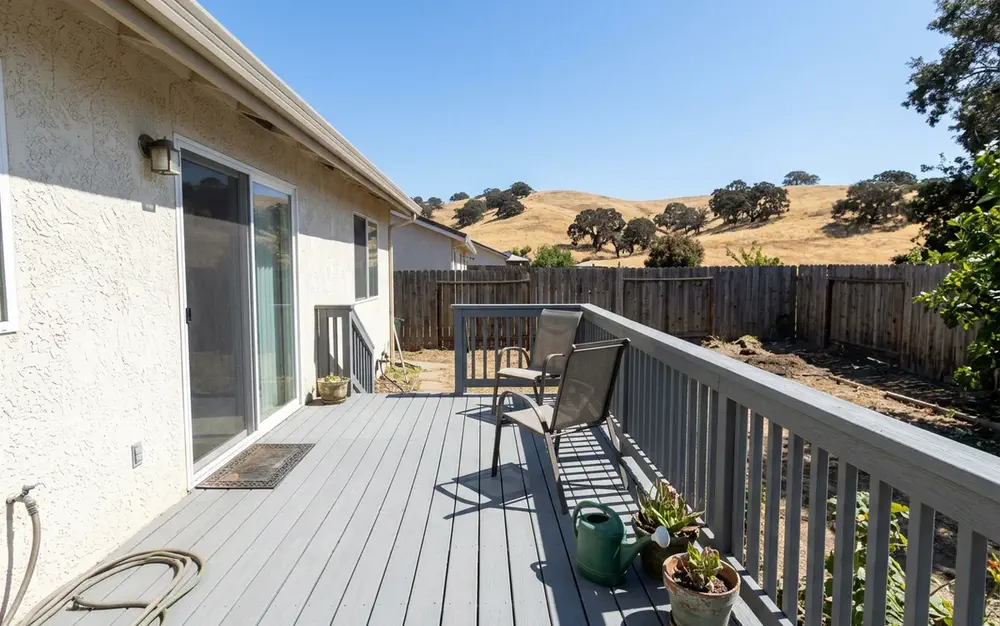
Composite boards on a new deck, or on the one replacing your old deck, and the railing and stairs can be composite too.
More about composite decks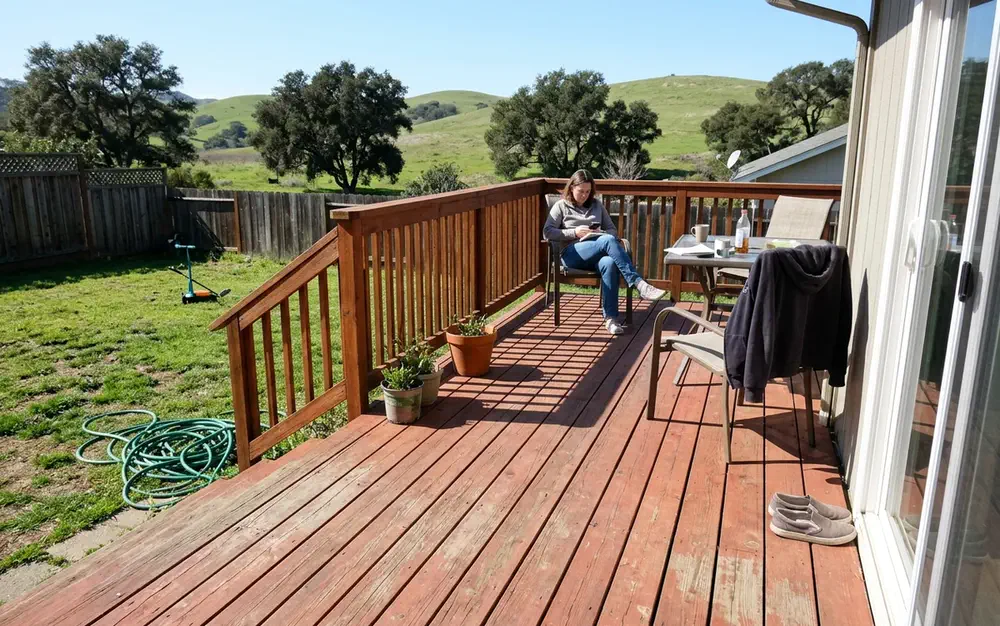
A deck of cedar, redwood or pressure-treated lumber, stained or left to weather.
More about wood decks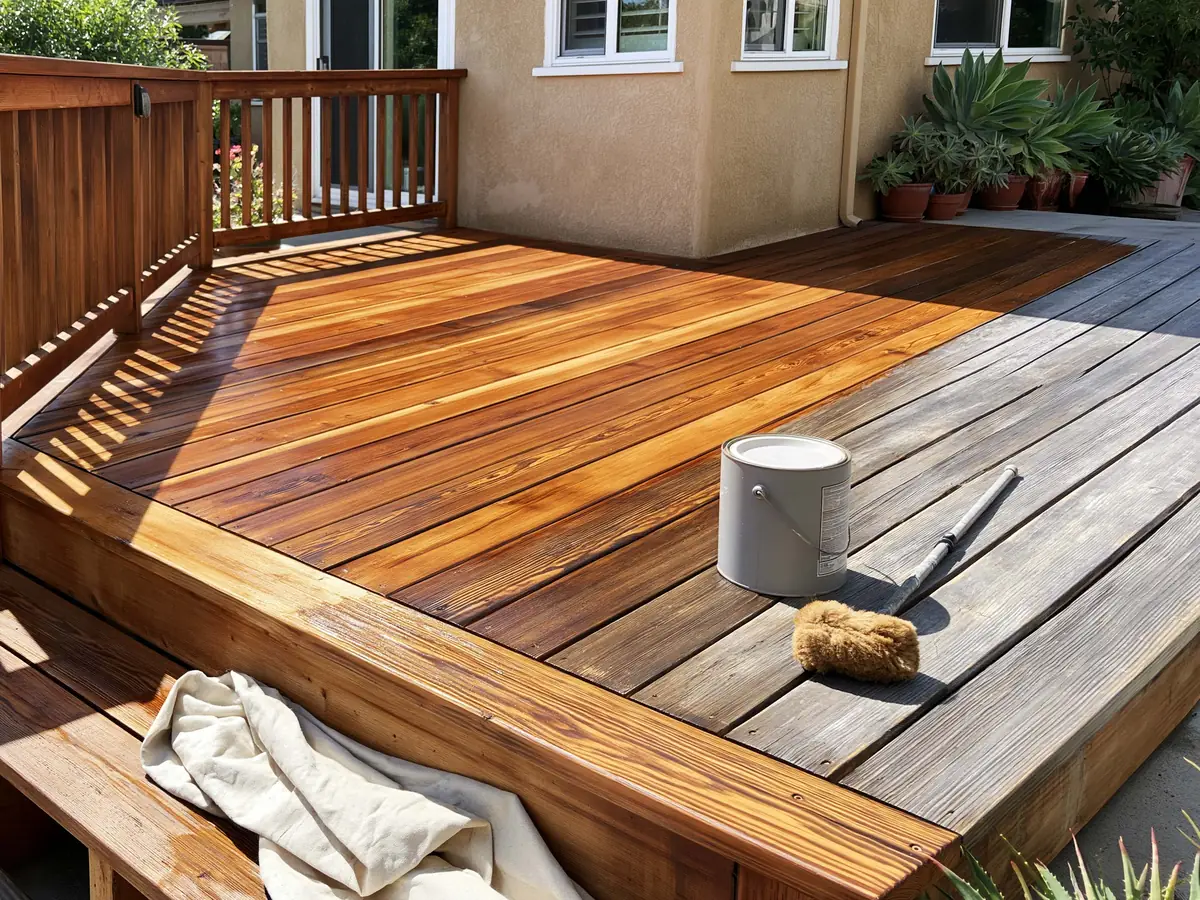
A weathered wood deck cleaned up and given new stain.
More about deck staining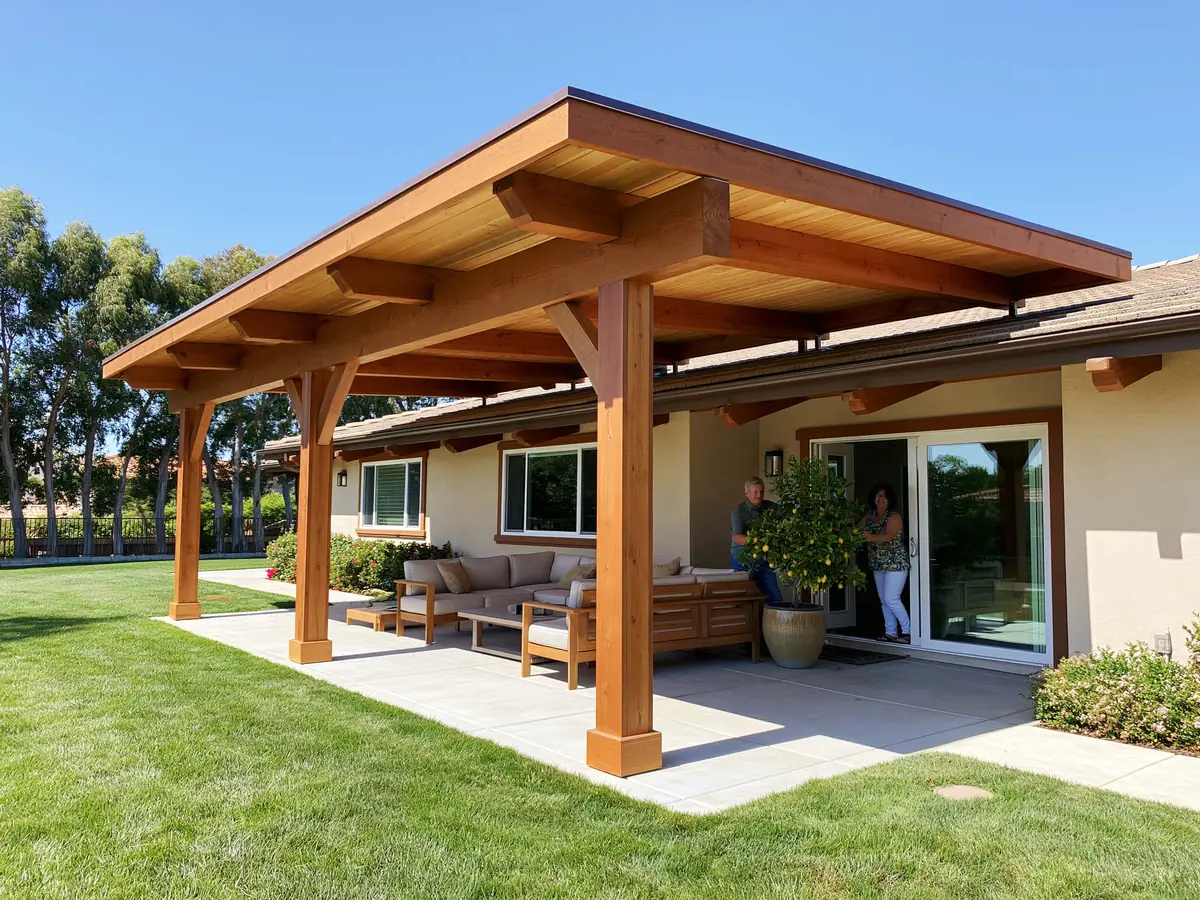
A wood pergola with an open roof, or a patio cover with a solid one.
More about patio covers and pergolasThe deck prices assume a typical deck, around 16 by 20, sitting against the back of the house, with railing on its open sides and three steps to the grass.
Repairs, replacement, staining and railings each have their own prices, on the page for that work.
Wood or composite, the boards rest on posts, beams and joists set on concrete footings. The boards you pick change how the deck looks and what it costs. If you're stuck between them, we'll price the deck both ways.
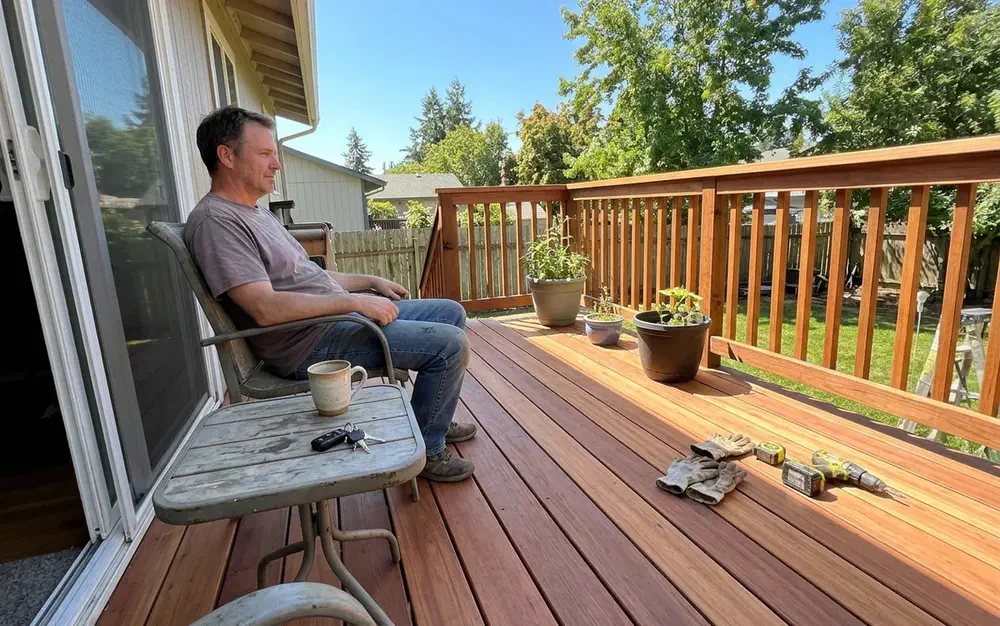
Pressure-treated costs the least. Cedar runs a little higher, and redwood higher again. Redwood grows on the California coast, and no other state produces redwood lumber.
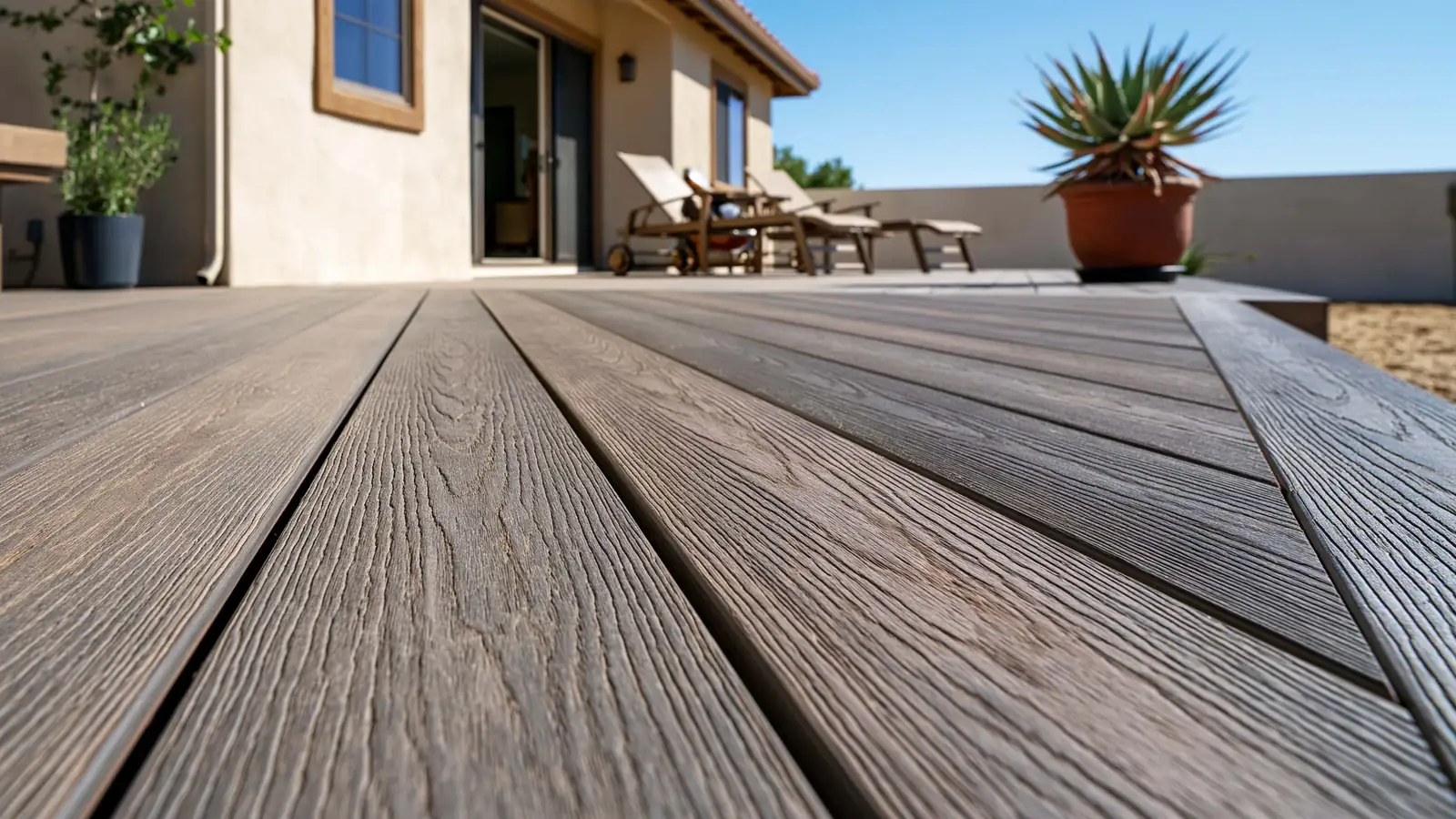
Composite decking costs more than a pressure-treated deck; the prices above show how much. Many composite boards are made of wood and plastic blended together.
The weather here is mild, but a deck sits out in all of it, every day.
Low cloud tends to roll in overnight and clear by midday, and here that happens in summer and early fall as much as in winter. Through most of the year, the air stays damp.
Mornings out on the deck tend to be calm. Later in the day the wind off the ocean blows harder, out of the west and northwest. The Santa Maria Valley lies wide open to the sea at its west end, so that wind, like the night's fog, is funneled inland.
For a deck you'll mostly use after work, it's worth thinking about which part of the yard is sheltered from that wind, and whether a screen on the windy side would help.
The boards often take the weather hardest, because they lie flat and face the sky, and that's where cracks and splits tend to show.
The damp tends to show up as mildew in the spots that dry out last, like a shady corner or the boards beside a planter. It leaves black marks on the wood without rotting it.
Winter brings most of the rain, summer stays nearly dry, and frost turns up on only a few nights a year. The warmest weather often waits for September and October, so early fall can be one of the best times of year to be out on a deck.
There's nothing to get ready before you send it. A sentence or two about your deck, or the deck you're picturing, is plenty to start with.
Tell us your town and what you'd like done, whether it's a new deck, a repair, stain or some shade.
We'll reply to arrange a visit, then come out to see your deck, or the place a new one would go.
We put the work and its price down on paper, and there's no charge for it. If a repair will do, we'll tell you.
Along its lower stretch, the Santa Maria River is the county line, with Santa Barbara County on the Santa Maria side and San Luis Obispo County across the river. Which side you're on, and whether your town is a city or unincorporated, decides whose building rules a new deck goes by.
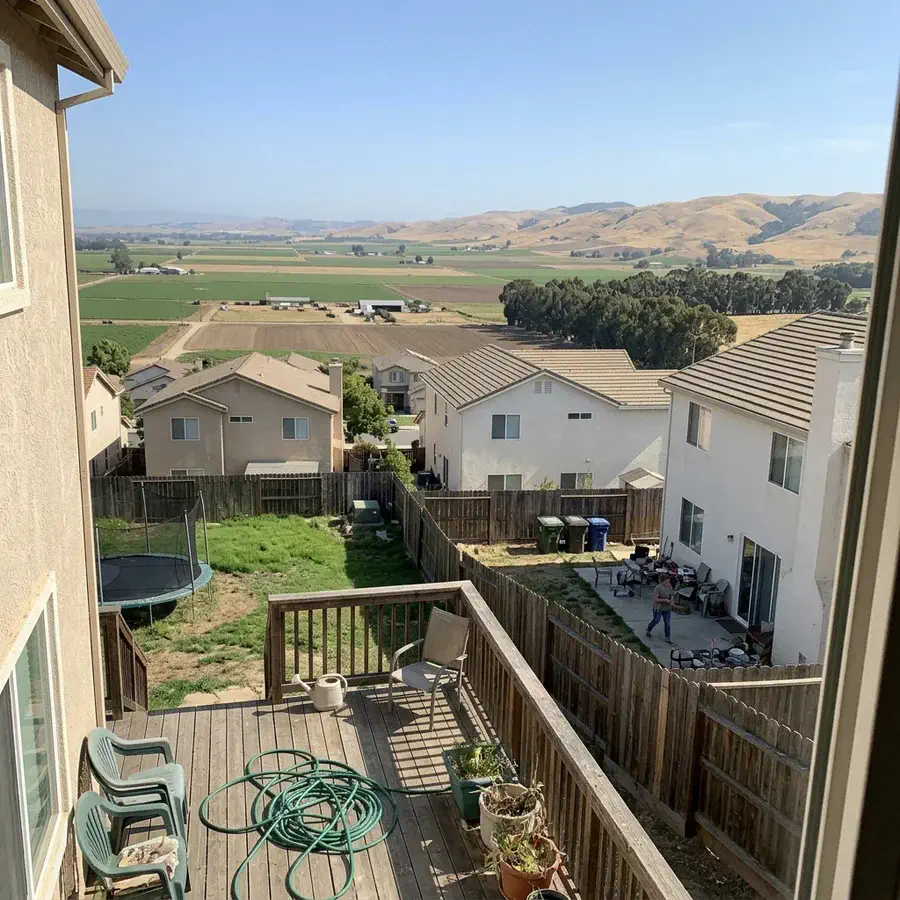
Santa Maria started out as Central City, laid out where four settlers' land came together at what's now Broadway and Main. The town took a new name because its mail kept ending up in Central City, Colorado.
Santa Maria-style barbecue came out of the old rancho barbecues in this valley, with beef cooked over the coals of a red oak fire.
A deck built mostly for cooking out needs room for a grill, a long table and people standing around waiting to eat. We'd size it for the table with the chairs pulled out, and give the grill a corner of its own.

Each one takes a single question further than this page has room for.
Around Santa Maria, a typical new deck of 16 by 20 or so costs $10,000 to $22,000 in pressure-treated lumber, and $15,000 to $30,000 in composite. That price includes the railing and the steps down to the lawn. A bigger deck, one off an upstairs door, or one with a roof over it costs more.
A 14 by 20 is a bit smaller than the typical deck around Santa Maria, which is about 16 by 20 and runs $10,000 to $22,000 in pressure-treated lumber, or $15,000 to $30,000 in composite. Price follows size, so the same deck at 14 by 20 costs less.
Sometimes. Under California's rule, a deck can skip the building permit only if all four of these are true: it covers no more than 200 square feet, no part of it is over 30 inches off the ground, it's freestanding, and it doesn't serve the house's required exit door. Santa Maria keeps that rule, so a deck joined to the house there needs a city permit, even a low one. Guadalupe and Grover Beach keep the same rule. Orcutt isn't a city, so its deck rules are Santa Barbara County's, and the county wants a building permit for any deck that stands more than 30 inches above the ground anywhere, plus a few other kinds. The other towns go by their own city's or county's rules, and we'll check which rules cover your deck.
A lot of the time, the repair is to one part of the deck: boards that have split or come loose, a railing that's started to wobble, a worn stair, a post or joist gone soft, or a footing that has settled. Each of those can often be put right on its own, and whatever's sound stays where it is. If rot turns up under a board once it comes off, that's extra, and we'll show you before it's added to the job.
You can, as long as what's underneath is still sound, and new boards on the frame you have cost less than building the deck again. What we check is the frame itself: the posts, the beams, the joists under the boards and, where the deck meets the house, the ledger board that ties it to the wall. If any of it needs work, you'll see what and why before you decide.
Clean it first, mildew and all, then give it a penetrating stain, the kind that soaks into the boards. Paint and other finishes that make a film over the wood tend to peel where people walk, so they're a poor match for a deck. After that, plan to stain it again every few years.